Lo-fi drums: the 12-bit sampler sound, step by step
The dusty, crunchy drums at the heart of lo-fi and boom-bap come from old samplers with low sample rates and few bits. The trick is to get that grit without losing the knock of the kick and the snap of the snare.
Why old sampler drums sound that way
Early samplers recorded at lower sample rates and with fewer bits than today's gear. A lower sample rate takes away top end and, if nothing filters it, folds bright frequencies back down as aliasing: the metallic fizz on hats and snares. Fewer bits add grit that grows as the sound gets quieter, so tails and room sound get rougher than the hit itself. Add the warm saturation of the circuits around the converter, and you have the sound.
Start from a machine
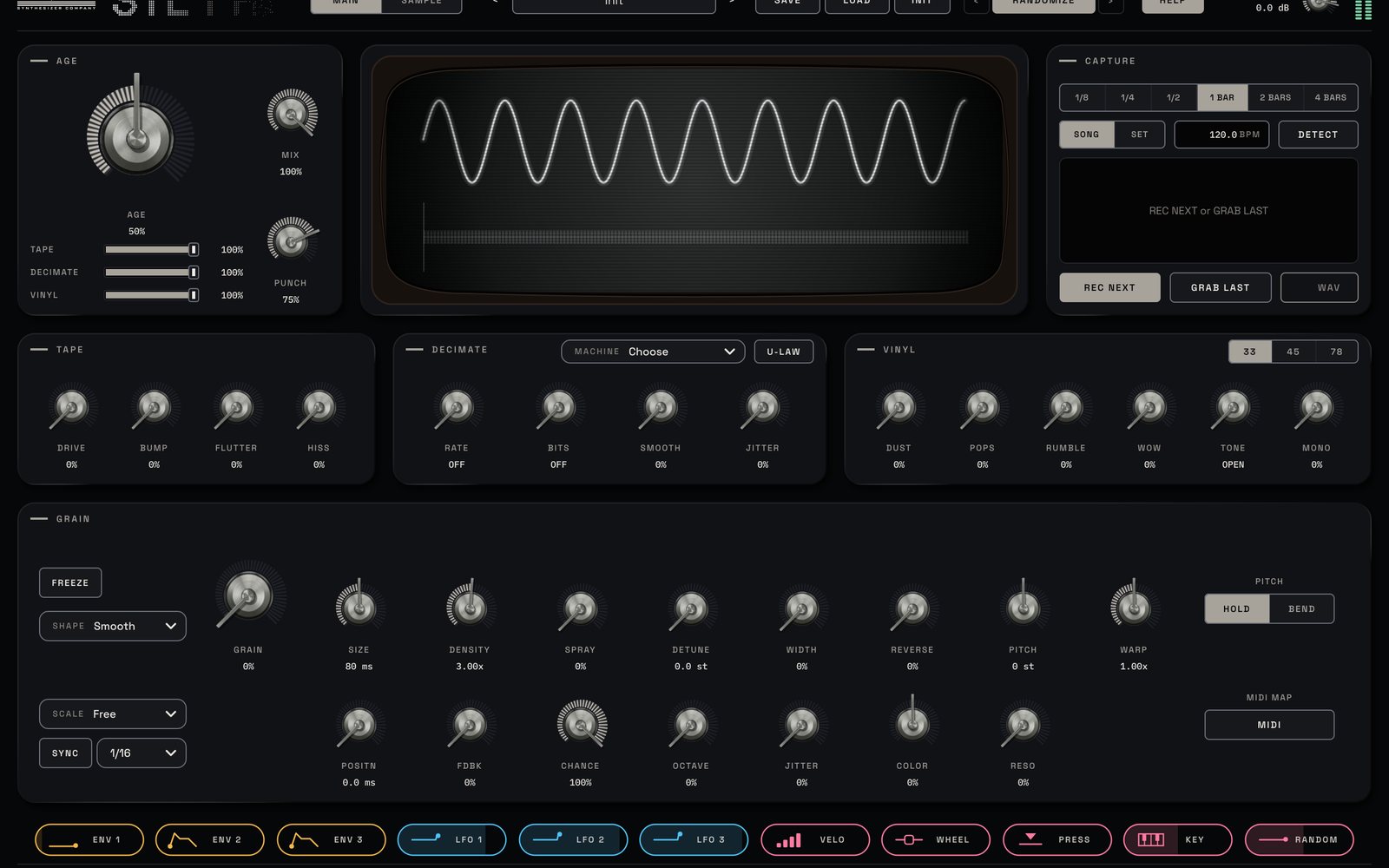
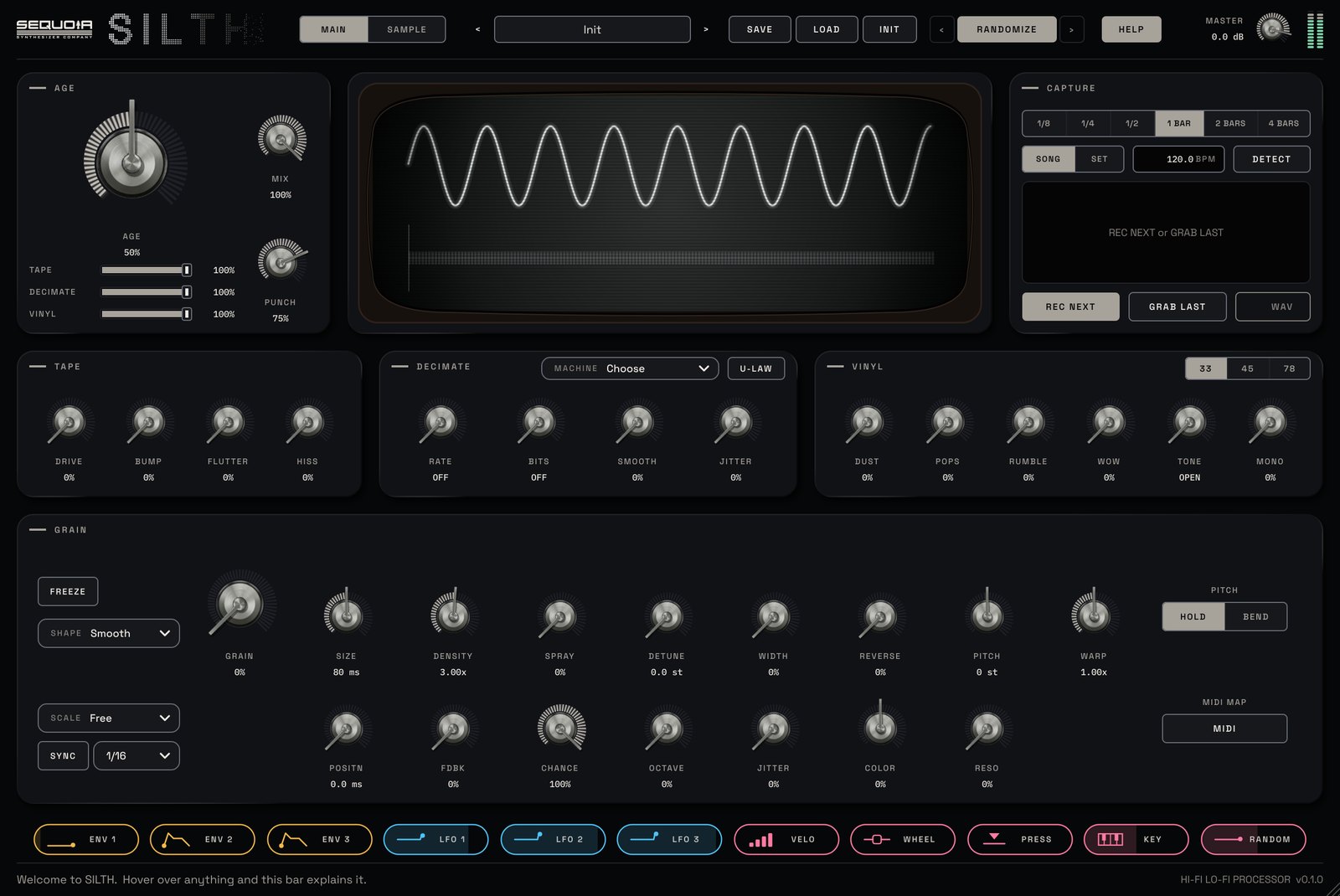
In SILTH, click MACHINE in the DECIMATE title. Three of them are made for drums:
- 12-bit drum sampler (26 kHz): no filter after the converter, so the top end fizzes and aliases, with punchy, driven lows. The classic hip-hop drum machine sound.
- 12-bit studio sampler (40 kHz): smooth filters, rounded highs and a soft, fat low end. Dark and glued, never fizzy. Good for slower, warmer beats and lo-fi house.
- 8-bit u-law sampler (28 kHz): quiet parts stay clear, loud parts get a rough, grainy edge.
A machine sets the converter and the tape and vinyl around it, and brings AGE up to at least 50% so you hear it as designed. One undo takes it all back.
Tune the converter by hand
- RATE: turn it right for a grainier, duller sound. A light touch keeps hats crisp; further right, the kit turns into a muffled, dusty loop.
- BITS: plain grit a quarter of the way up, hard crunch by halfway. On drums a little goes a long way.
- SMOOTH: low is raw aliasing sparkle, high is soft and clean. This is the difference between a fizzy sampler and a warm one.
- JITTER makes the sample clock wander for a soft, unstable grit, and U-LAW lets loud parts tear.
Keep the knock with PUNCH
The usual problem with crushed drums is that the attack goes soft. PUNCH fixes that: when a hit starts, SILTH brings back its level and lays part of the clean attack over the first few milliseconds, while the body and the tail stay fully processed. It starts at 75%; push it towards 90% on a drum bus. Only the heaviest settings, such as very low BITS or RATE, are still allowed to mangle the attack.
Add the warmth around it
Old drums were rarely bright and wide. A little BUMP in TAPE adds the warm swell around 90 Hz that makes a kick feel bigger, and DRIVE rounds off the peaks. In VINYL, MONO folds the low end to mono and TONE rolls off the top. Use MIX to blend the dry kit back in if you want clarity under the crunch.
Print one-shots and loops
Drop a drum loop or a single hit onto SILTH and the SAMPLE page plays it through once and prints a new 24-bit WAV to drag into your song. For one-shots, turn TAIL on so the ring after the hit is kept; for loops, leave it off and light LOOP for a seamless print. On a live drum bus, CAPTURE with GRAB LAST keeps the bar that just played.
A starting point
Dusty boom-bap bus: MACHINE 12-bit drum sampler, AGE 55%, PUNCH 90%, BUMP 30%, MONO 50%, MIX 80%. For a softer lo-fi house kit, switch to the 12-bit studio sampler and bring AGE down to about 45%. For tape and vinyl on the rest of the track, see the lo-fi tape and vinyl guide.
Comparing lo-fi plugins in the sales
Late November 2026 is plugin sale season. If you are trying out lo-fi and bitcrusher plugins this year, test each one on a full drum loop rather than a pad, and listen to whether the kick and snare keep their attack as you add grit. On drums, that matters more than anything else.
Questions
What sample rate and bit depth give the 12-bit lo-fi drum sound?
The 12-bit sound sits roughly between 26 and 40 kHz. In SILTH, the 12-bit drum sampler machine runs at 26 kHz with no filter after the converter, for fizz and aliasing, and the 12-bit studio sampler runs at 40 kHz with smooth filters, for a darker, glued sound. Start with one of those and adjust RATE and BITS by ear.
Why do my drums lose punch when I bitcrush them?
Bit and sample-rate reduction blur the first few milliseconds of each hit, where the punch lives. SILTH's PUNCH control lays part of the clean attack back over the start of every hit while the body and the tail stay processed.
Should I crush the whole drum bus or single drums?
Both work. A bus gives the glued sound of a sampled break; single hits let you keep the kick cleaner and crunch the hats and snare harder. SILTH's SAMPLE page prints each one-shot as a new WAV, with TAIL on to keep the ring.
Try it with SILTH
Lo-fi plugin for tape, vinyl and bitcrushing. See SILTH →
$5935% off for the sign-up list at launchStore links and the 14-day free trial go live at launch. The trial just needs a free Sequoia account.